Comparing the Realness of Problems by Digging into My Trauma Memory Bank
"We have a real problem," My wife tells me with a serious face.
I know real problems. I don't like real problems. And just like that, I have a flashback to when my mom was raising us in Barranquilla, Colombia.
As a single mom, she struggled to make ends meet. She had to toss a coin to decide which utility service would get paid, and none of them were ever current, so the decision was more which one would be less behind.
It is tough to decide whether to pay the water or the electricity. That would never be a board game. If anything, it would be a sick "Would you rather" question: "Would you rather be cold or stinky?"
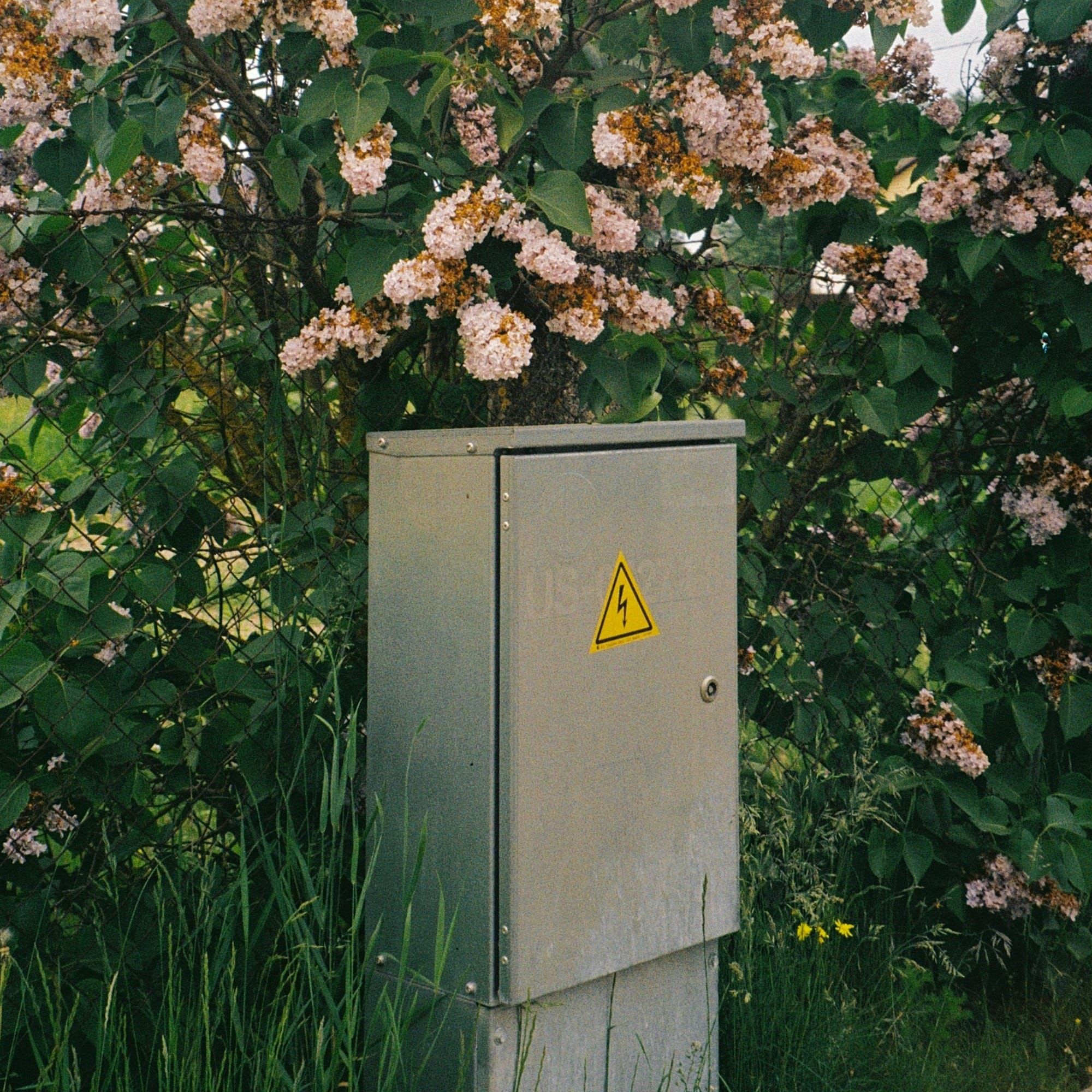
When the electricity fell behind, the utility company would send a technician to our house to cut some hardware inside the power room so that we would have no power, and we couldn't easily reconnect it.
After that, my mom would go to a part of the city known as "Miami Caño."
Miami evokes images of tall palm trees, attractive men and women skating while holding cocktails with tiny umbrellas.
But the word caño means sewage. " Miami Caño," or "Sewage Miami," is a creative way to describe a sketchy area of town where my mom could find shady characters who could reconnect all the pulled hardware so we could have electricity.
Their qualifications were that they were willing to do it.
And that was it.
We were part of a community with 22 families, and they couldn't care less if we plugged the power back in illegally, but whenever we interrupted their service, they would get really upset! Which we often did because these electricians weren't great.
These illegal reconnections were happening throughout the city, and one time we were reinstalling the power, the local news station sent a crew to produce a segment on what we were doing. Even if our neighbors were mad at us, we were still part of the group, and the TV crew wasn't.
Our neighbor from across the hall, Cesar, was there. All the boys in our neighborhood liked Cesar but we were afraid of him because he had terrible mood swings, a side effect of what can be medically described as smoking a-tons of pot!
That day, I looked at him from our apartment window, chasing the cameraman with a broom. When he finally caught up to the man, he gave him a whack so hard he broke the broom in two.
The cameraman took it like a champ.
Don't get me wrong, he cried like a baby.
But he never let go of the camera. How professional.
Even in my early teens, I looked at all that and thought, "This is not in that guy's job description."
I returned to the present and asked my wife, "What is this real problem?"
She told me, "Amélie (our youngest) is in our backyard mixing our 1/2" river pebbles with our 1" shadow bark, and it is going to be really hard to separate them again."
Let me repeat: I have a backyard in Sonoma County.
My life is good!
I have this annoying habit. When she tells me hyperbolic catastrophes, I'll dig into my past and bring out a memory I have never shared with her about my upbringing.
Like this.
"Once, when I was a teenager, I finished my dinner, but I was still hungry, so I looked around the house, but there was no more food anywhere."
"I didn't want to bother anyone, so I went and lay in my bed, hoping to fall asleep while I clutched my stomach. When my mom came home from work, she found me in my room crying because for the first time in my life, I was going to bed hungry."
Let me stop right here.
I want to remind you not to feel bad for me.
I also have a front yard.
My life is good!
"My mom said, 'Tsk, tsk, Carlos Eduardo, no seas bobo!' She called me a dummy and told me to get up and sit at the table."
"I don't know how, but she pulled enough masa to make two arepas. I went to bed with a full belly. I never had to know what it was like to go to bed hungry thanks to my mom."
"Years later, I found out my mom went to bed hungry because she gave me her food."
I don't know what you call how we were growing up. My mom would never say we were poor, and maybe we weren't, at least not in the way people can be poor in Colombia. We always had a roof over our heads; my sister and I never went hungry, and most of the time all of our utility services worked simultaneously, not legally, but still.
It doesn't matter what anyone would call it. One of the only perks of growing up like I did is that when people tell you they have a real problem and they tell you their real problem, you can look at them and say that's not a real problem.
That's barely a nuisance; a nuisance of living a good life, a good life with a backyard and a front yard.